
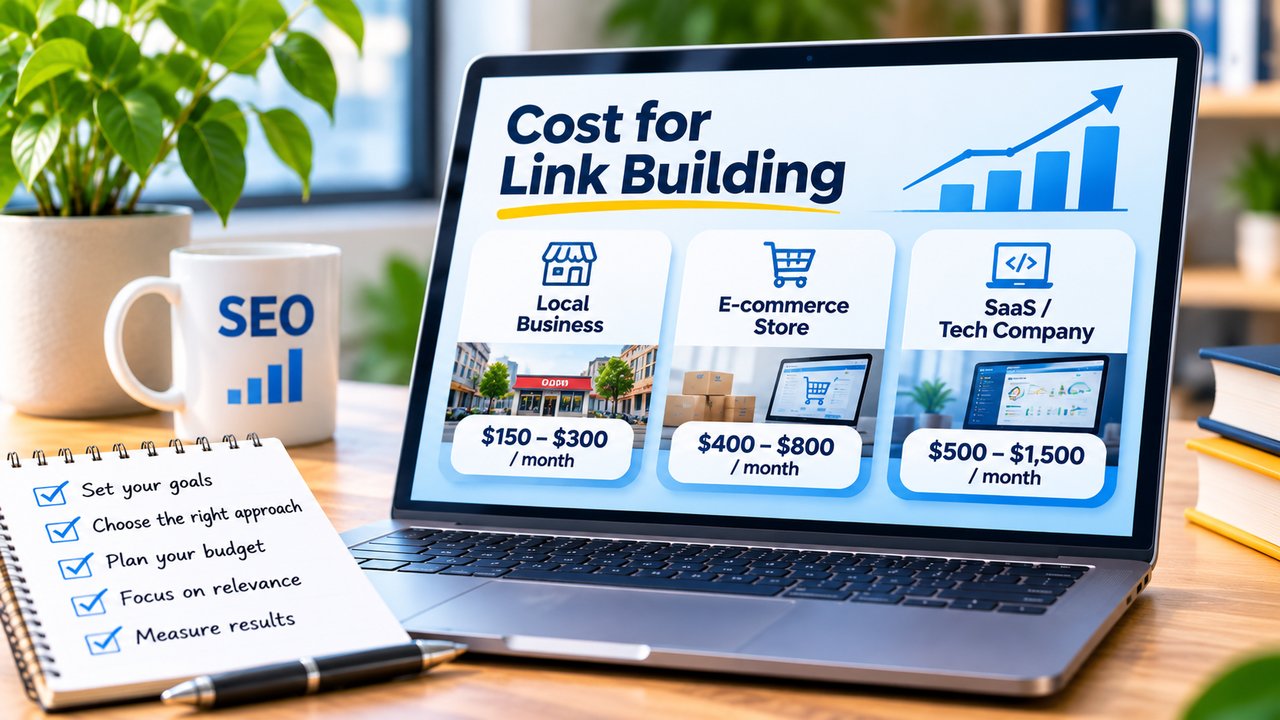
A small local business, a growing online store, and an international software company have one thing in common: they all want more people to discover their websites.
But should they spend the same amount on backlinks?
Absolutely not.
One company might achieve its marketing goals with a few carefully chosen publications. Another could require a more extensive content strategy across multiple countries and industries.
That's why the cost for link building should never be decided solely by looking at what competitors spend or how many backlinks an agency promises.
A sensible budget begins with understanding your business, your customers, and the opportunities available in your market.
Let's explore what link building investments might look like for different types of businesses.
Why Your Business Model Matters More Than Your Competitor's Budget
Imagine running a small family-owned plumbing company.
Your customers search for emergency repairs, heating installations, and maintenance services within a limited geographic area.
Now imagine operating an international e-commerce business selling electronics in five countries.
Both companies need visibility, but their SEO challenges are completely different.
The plumbing company might focus on establishing a strong local reputation, while the online retailer needs to compete across numerous product categories.
Their link building cost should reflect those differences.
Copying another company's budget without considering your own objectives can lead to unnecessary spending.
Instead, begin by identifying the pages that attract valuable customers and the markets where you want to improve your presence.
Scenario 1: Link Building for a Local Service Business
Local businesses frequently operate with relatively modest marketing budgets.
Consider a cleaning company serving a single metropolitan area.
Its website includes a homepage, several service pages, customer reviews, and a few helpful articles.
The company wants to appear more frequently when local customers search for professional cleaning services.
What would a reasonable budget look like?
A hypothetical monthly allocation of $150–$300 could be a starting point, depending on competition and available resources.
Rather than purchasing dozens of unrelated backlinks, the company could concentrate on:
• Relevant local business publications
• Regional websites with genuine audiences
• Informative content connected to cleaning and maintenance
• Local partnerships and business associations
• Useful resources that other websites may naturally reference
The objective is to establish relevance and credibility among the people most likely to become customers.
For a local business, a relevant mention on a regional website may offer greater practical value than an expensive placement on an unrelated international publication.
This is an important consideration when evaluating the cost of link building.
Scenario 2: How Much Should an E-Commerce Store Spend?
E-commerce companies face a different challenge.
An online store may have hundreds or thousands of product pages, several competing categories, and competitors investing heavily in content marketing.
Let's imagine an online furniture retailer.
Its most important categories include sofas, dining tables, office furniture, and bedroom accessories.
Instead of spreading its budget equally across the entire website, the retailer identifies two categories with particularly strong commercial potential.
It then develops useful content around interior design, furniture selection, and home improvement.
A hypothetical budget of $400–$800 per month could support selected publishing opportunities and content promotion.
For example, articles covering home office design might be placed on relevant lifestyle or interior design websites.
These publications could introduce the business to new audiences while supporting its broader online presence.
When comparing link building prices, an e-commerce company should pay particular attention to topical relevance and potential customer interest.
A backlink from a website whose readers are genuinely interested in furniture may offer more marketing value than a placement chosen exclusively because of an authority score.
Scenario 3: Link Building for SaaS and Technology Companies
Software businesses often compete for highly specialized keywords.
Terms related to CRM software, project management, cybersecurity, and cloud infrastructure can attract established companies with considerable marketing resources.
This makes content quality especially important.
Imagine a SaaS startup offering project management software for construction companies.
Its potential customers include project managers, contractors, and engineering teams.
A generic backlink campaign covering unrelated websites would do little to introduce the product to these audiences.
A more focused strategy might involve publishing helpful articles about construction workflows, project scheduling, and collaboration.
A company in this position could consider a monthly publishing and outreach budget of $500–$1,500, depending on its resources and competition.
The actual link building services cost would depend on the selected publishers, writing requirements, and level of campaign management.
For specialist industries, creating genuinely useful content may require additional research or technical expertise.
That expense can be worthwhile when the content reaches the right professional audience.
Scenario 4: International Businesses and Multilingual Campaigns
Expanding into new countries introduces another layer of complexity.
A business operating in the United States, Germany, France, and the Netherlands may need content adapted to several languages and markets.
Simply translating an English article is not always enough.
Local terminology, customer expectations, industry publications, and search behavior can differ significantly.
For example, a business targeting German-speaking customers may benefit from publishing content on relevant German-language websites.
An international company could allocate a separate budget to each target market rather than treating all countries as one campaign.
This helps clarify the cost for link building in each region and makes performance comparisons easier.
The appropriate investment depends on the commercial importance of each market.
Should You Pay for Individual Backlinks or a Complete Campaign?
Once you've identified your business requirements, the next decision concerns how to purchase publishing services.
There are two common approaches.
Individual Publications
Individual placements allow companies to select specific websites.
This approach is particularly useful when topical relevance and publisher selection are priorities.
For example, an accounting company might choose a business publication discussing tax planning.
A fitness equipment retailer might prefer a website covering exercise and wellness.
The backlink price depends on the publishing website and its requirements.
The advantage is control over individual placements.
Structured Publishing Campaigns
Campaign packages offer another option.
Instead of managing every publication separately, customers purchase a predefined service involving multiple publishing activities.
Bzoomer provides both individual publishing opportunities and automated SEO campaign packages.
Its marketplace includes more than 50,000 websites, giving customers access to numerous publishing options across different topics and markets.
Individual publications start at $12, while automated packages start at $34 and All-in-1 campaigns start at $49.
All-in-1 campaigns combine a main article with supporting SEO publications as part of a coordinated campaign structure.
For businesses that prefer a simplified ordering process, this can be an alternative to coordinating numerous individual placements.
However, businesses should still evaluate the content, publishing relevance, and intended role of each campaign component.
A Practical Example: Planning a $1,000 Link Building Budget
Let's say your business has $1,000 available for off-page SEO and content promotion.
How could you distribute that money?
One hypothetical allocation might look like this:
• $400: Relevant editorial publications on selected websites
• $250: Creation or improvement of informative website content
• $200: A structured publishing campaign
• $150: Monitoring, analysis, and adjustments
This example illustrates how link building can fit into a broader SEO strategy.
Your actual allocation will depend on whether writing, publishing, and management are included in the services you purchase.
The goal is to avoid spending the entire budget on backlink quantities without considering the content and website experience those links are meant to support.
What Does a Higher Link Building Price Actually Buy?
Paying more for a publication may provide access to a website with a relevant readership, stronger editorial requirements, or more demanding content standards.
However, expensive backlinks aren't automatically better.
Consider two hypothetical websites.
Website A has a strong authority score but publishes articles covering hundreds of unrelated subjects.
Website B has more modest SEO metrics but focuses entirely on a specialist industry and attracts an engaged audience.
For a business operating within that industry, Website B might be the more relevant publication opportunity.
This is why link building pricing should always be considered alongside website quality.
Metrics such as Domain Rating, Domain Authority, organic visibility, and referring domains are useful starting points, but they don't tell the complete story.
Common Mistakes That Increase Link Building Expenses
Businesses sometimes waste money not because backlink prices are excessively high, but because their purchasing decisions lack direction.
One common mistake is choosing publications without identifying which audience they want to reach.
Another is investing heavily in backlinks while neglecting the quality of their own website.
Imagine attracting visitors to a poorly designed service page that doesn't explain the company's offer.
Even relevant referral traffic may struggle to produce enquiries.
Other mistakes include buying unnecessary quantities, repeatedly targeting the same irrelevant websites, and failing to review published content.
Businesses should also understand search engine policies. Paying for links that pass ranking credit can violate Google's spam guidelines. Sponsored placements should use appropriate link attributes.
A sustainable publishing strategy prioritizes genuine audience value rather than attempting to manipulate search rankings.
How to Know Whether Your Link Building Investment Is Working
The success of a publishing campaign shouldn't be measured exclusively by the number of backlinks delivered.
Instead, consider several performance indicators.
Organic visibility: Are relevant pages receiving more impressions or appearing for additional search queries?
Referral traffic: Are visitors reaching your website through published articles?
Conversions: Are visitors submitting enquiries, making purchases, or requesting demonstrations?
Brand visibility: Is your company appearing in more relevant industry discussions and publications?
These indicators help businesses understand whether their marketing activities support commercial objectives.
Remember that SEO results are influenced by technical performance, content quality, competition, and other factors. Changes in rankings cannot automatically be attributed to individual backlinks.
Frequently Asked Questions
What is a reasonable cost for link building?
The right budget depends on your business size, competition, target market, and publishing requirements. Some businesses start with modest campaigns, while others invest thousands of dollars in broader content and outreach strategies.
Can a small business afford professional link building?
Yes. Businesses can purchase individual publishing opportunities or use predefined campaign packages instead of committing to expensive monthly agency contracts.
How much does one backlink cost?
Individual publication prices vary substantially. Bzoomer offers publishing opportunities starting at $12, although costs depend on the selected website and service requirements.
Is a larger campaign always better?
No. Campaign size should reflect your objectives. A smaller collection of relevant editorial placements may provide more meaningful audience exposure than a larger number of unrelated publications.
How often should a business invest in link building?
There is no universal schedule. Some companies publish content consistently throughout the year, while others organize campaigns around product launches, seasonal demand, or market expansion.
Final Thoughts: Build a Budget Around Your Business
The cost for link building should reflect what your business is trying to achieve, not simply what other companies are spending.
A local service provider may benefit from a small number of relevant regional publications. An e-commerce company might require a broader content strategy, while an international SaaS provider may prioritize specialist websites across multiple markets.
Bzoomer offers individual publishing opportunities and structured SEO campaigns for companies looking to explore different publishing approaches within their budgets.
Start by understanding your audience, identify the publications that make sense for your industry, and select a purchasing model that gives you appropriate control over your investment.
Ultimately, the smartest approach isn't about purchasing the maximum number of backlinks.
It's about investing in relevant content, credible publishing opportunities, and marketing activities that support your business objectives.