
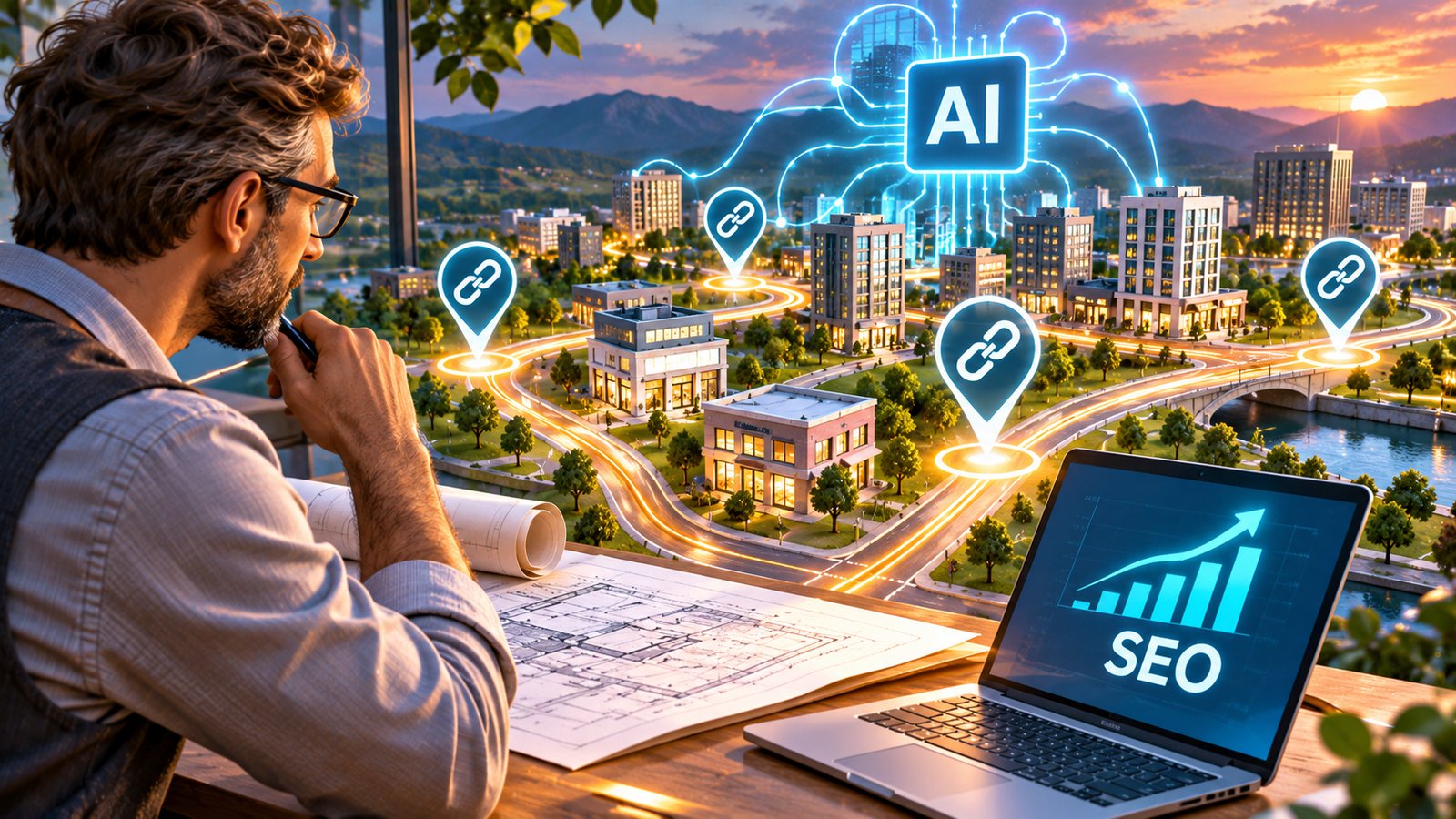
Imagine opening a beautiful restaurant in the middle of nowhere. The chef is exceptional, the interior is stunning, and the menu deserves an award. There is just one problem. No roads lead to it.
How many customers would find their way there?
The internet operates in a surprisingly similar fashion. A website can offer outstanding products and valuable information, yet remain practically invisible. This is where AI SEO link building enters the picture, helping businesses develop connections between their websites and the wider digital world through AI-assisted content creation and external publications.
Building a website is like constructing a destination. Building relevant backlinks is like creating roads that lead people toward it.
Every Website Needs Connections
Think about a successful city. Its neighborhoods are connected by streets, bridges, highways, and public transportation. People can discover new businesses, travel between districts, and explore places they might otherwise never encounter.
Now imagine the internet as an enormous city containing millions of businesses competing for attention.
Some websites occupy prominent locations. Others are hidden behind countless digital buildings, waiting to be discovered.
External links help connect these destinations. They allow users to navigate between related information and help search engines discover relationships between online resources.
The challenge is that constructing these digital connections manually requires considerable time and effort.
Artificial intelligence offers another approach.
Meet the Digital Urban Planner
A good urban planner does not simply build as many roads as possible. They consider where people want to travel, which destinations should be connected, and how the infrastructure can serve its purpose.
Effective AI SEO link building follows a similar philosophy.
Artificial intelligence can assist businesses with developing article topics, identifying relevant publication opportunities, organizing campaigns, and managing recurring publishing activities.
Instead of spending hours coordinating isolated backlinks, marketers can concentrate on designing a more comprehensive strategy.
Where should the connections lead? Which products deserve greater visibility? What information would potential customers find useful?
These questions are far more important than simply asking how many backlinks a campaign can produce.
Technology helps execute the plan. The business still needs to decide what it wants to achieve.
A Bicycle Shop With No Roads Leading to It
Let's consider a hypothetical example.
Michael owns an online bicycle shop specializing in gravel bikes. His product descriptions are detailed, his prices are competitive, and he regularly publishes maintenance guides.
Unfortunately, organic traffic remains disappointing.
“We've built a great website. Why does nobody seem to know we exist?” he asks his marketing colleague.
The problem is not necessarily the website itself. Its external visibility is limited.
An AI-assisted publishing campaign could introduce Michael's business through articles about gravel cycling, bicycle maintenance, weekend adventures, and equipment selection.
A publication explaining how to choose a first gravel bike might naturally introduce his product range. Another article discussing essential equipment for long-distance cycling could reference relevant accessories.
Each useful publication creates another potential route through which customers can discover the business.
This is the principle behind strategic AI link building.
The objective is not to construct random roads. It is to establish connections that make sense.
Not Every Road Leads Somewhere Useful
A highway connecting two major cities can serve thousands of travelers. A road ending abruptly in an empty field is considerably less useful.
Backlinks deserve the same critical assessment.
A relevant publication discussing cycling equipment can provide meaningful context for a bicycle retailer. A generic article on an unrelated topic may contribute little to the company's visibility among potential customers.
When planning external publications, businesses should consider:
• The relationship between the publishing website and the target industry.
• The usefulness and accuracy of the surrounding article.
• Whether the publication addresses genuine customer questions.
• The natural placement and destination of the backlink.
• Appropriate disclosure and link attributes for commercial placements.
Successful backlink generation requires more than impressive numbers displayed on a dashboard.
Relevance, credibility, and editorial quality should guide the campaign.
Choosing the Right Construction Partner
Building digital visibility independently can be demanding, particularly for businesses without dedicated SEO departments.
One platform designed to simplify these activities is Bzoomer, which combines AI-assisted content creation, external publishing, and backlink campaign management.
Its marketplace includes more than 50,000 websites, while its Autopilot functionality allows businesses to organize recurring campaigns.
Instead of arranging every publication individually, users can manage their activities through a centralized platform.
This makes it an option worth considering for online retailers, marketing agencies, entrepreneurs, and businesses targeting international audiences.
When choosing a platform for AI SEO link building, however, customers should evaluate more than the size of its publishing network.
Campaign flexibility, reporting, content relevance, and transparency are equally important considerations.
AI Assistants Are Becoming the New Navigation Systems
For years, Google has acted as the primary navigation system of the internet.
People entered destinations in the form of keywords and received directions in the form of search results.
Generative AI introduces another possibility.
Instead of searching for individual websites, customers can ask ChatGPT, Gemini, or Perplexity to recommend suitable businesses based on detailed requirements.
A cycling enthusiast might ask:
“Which online stores specialize in gravel bikes suitable for beginners planning long weekend trips?”
The AI assistant may consult available online information to formulate its response.
For Michael's bicycle shop, relevant external publications could provide additional information about its specialization, product range, and relationship to particular cycling activities.
This is where AI SEO backlinks can become part of a broader generative engine optimization strategy.
Informative publications help create context around a business. However, their existence does not guarantee that an AI assistant will discover, reference, or recommend that business.
Building a City Takes Time
No successful city was constructed overnight.
Infrastructure develops gradually as new neighborhoods appear, businesses expand, and transportation requirements change.
Digital visibility also requires ongoing attention.
A company that publishes several articles and then abandons its external marketing activities may miss future opportunities to reach customers.
Through automatic link building, businesses can organize recurring publications and maintain a more consistent approach without repeatedly starting from scratch.
Nevertheless, consistency should not be confused with excessive publication. Producing large volumes of repetitive or irrelevant content can undermine the usefulness of a campaign.
Paid links intended to manipulate search rankings may also violate search engine guidelines.
The goal should be meaningful development rather than uncontrolled expansion.
How Can Businesses Measure Their Digital Infrastructure?
Counting backlinks is relatively easy. Understanding their contribution to business visibility is more complicated.
A comprehensive evaluation may include organic search impressions, keyword visibility, referral traffic, brand mentions, relevant AI-generated responses, and website conversions.
These indicators provide different perspectives on campaign performance.
A publication might introduce a business to new readers without immediately affecting its search positions. Another could contribute to brand recognition over a longer period.
Businesses should evaluate these changes collectively rather than attributing every improvement to a single marketing activity.
Frequently Asked Questions
What is AI SEO link building?
It is an approach to external website promotion that uses artificial intelligence to assist with content creation, publication planning, backlink acquisition, and campaign management.
Can AI SEO link building replace traditional SEO?
No. It complements technical SEO, website optimization, original content, and other marketing activities rather than replacing them.
Is AI-assisted link building suitable for small businesses?
Yes. It can reduce administrative work and make recurring external publishing campaigns easier to organize.
Can AI-generated publications improve visibility in generative search?
Relevant, credible, and accessible publications may support brand discoverability. However, no platform can guarantee inclusion in AI-generated recommendations.
Give Your Customers More Ways to Find You
The digital world is crowded. Somewhere within it, potential customers are searching for precisely what your business offers.
The question is whether they can find their way to you.
AI SEO link building provides businesses with tools to establish relevant external connections, develop informative publications, and manage their digital presence more efficiently.
But remember the restaurant at the beginning of this article.
Building a thousand roads is pointless if none of them leads the right people to your door.
Build connections with purpose. Create content worth discovering. Give customers a reason to make the journey.